
What to Expect in a BJJ Class
Learn what happens in a typical BJJ class—warm-up, technique drilling, rolling—plus what to bring, hygiene tips, beginner advice, and how to pick a gym.
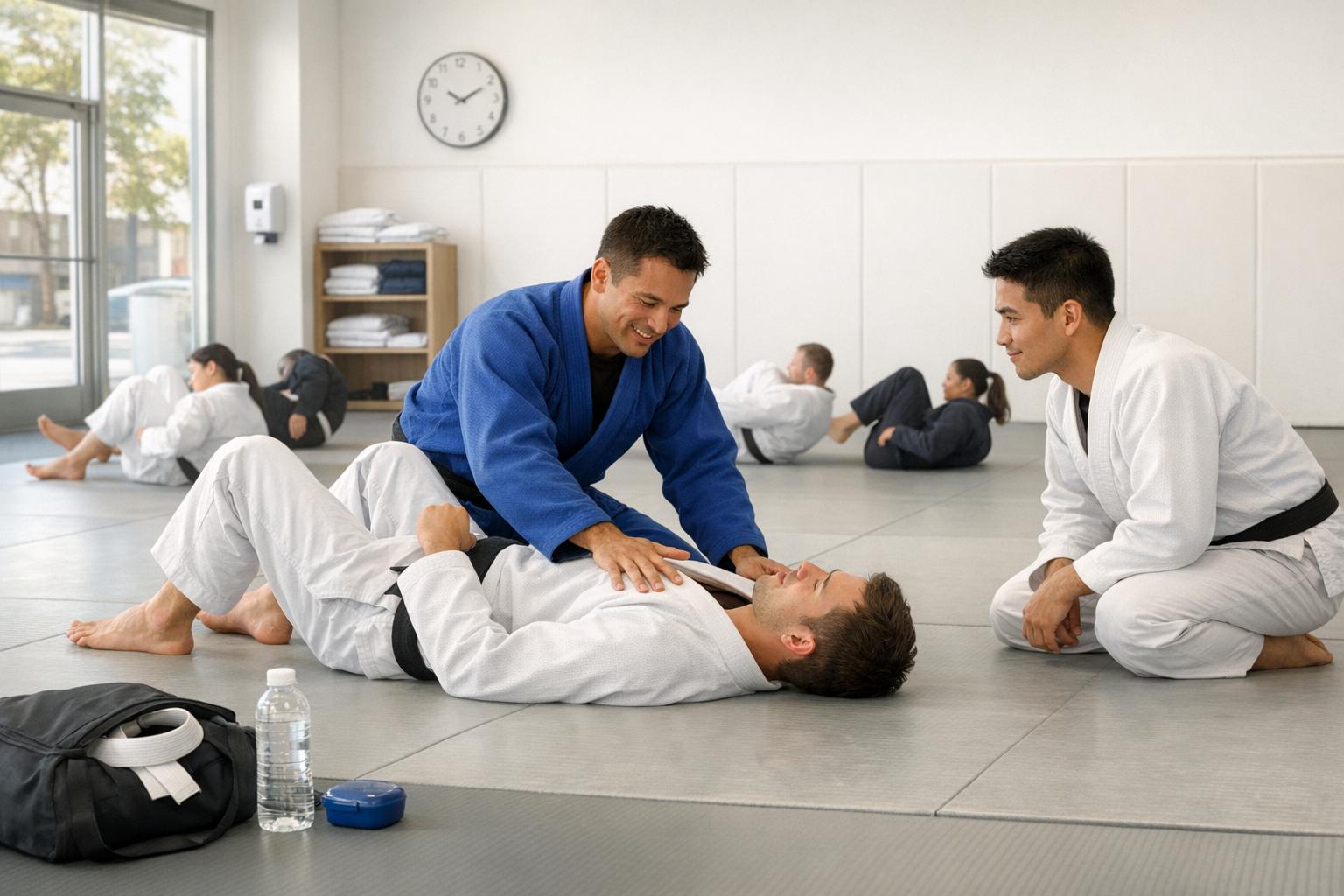
What to Expect in a BJJ Class
Starting Brazilian Jiu-Jitsu (BJJ) can feel intimidating, but knowing what to expect makes it easier. Here’s a quick breakdown:
-
Class Structure: Most classes last 60–90 minutes and include:
- Warm-Up: Movements like shrimping, bridging, and jogging to prepare your body.
- Technique Drilling: Learn and practice specific moves step-by-step with a partner.
- Sparring (Rolling): Optional for beginners, this is live practice against a resisting partner.
- What to Bring: Athletic clothes (or a loaner Gi), water bottle, flip-flops, towel, and a change of clothes. Avoid clothes with zippers or pockets.
- Hygiene Matters: Trim nails, shower before class, and always wear clean gear. Remove jewelry and cover cuts to prevent injuries and infections.
-
Beginner Tips:
- Expect to feel awkward at first - stick with it.
- Tap out to signal submission and stay safe.
- Consistency (2–3 classes per week) is key to progress.
- Choosing a Gym: Look for verified instructors, beginner-friendly programs, and clean facilities. Free trial classes are common, and memberships range from $70–$200/month.
BJJ is all about learning through practice, patience, and persistence. Just keep showing up, and you'll improve over time.
What to Expect in Your First BJJ Class
sbb-itb-d583f1e
How BJJ Classes Are Structured
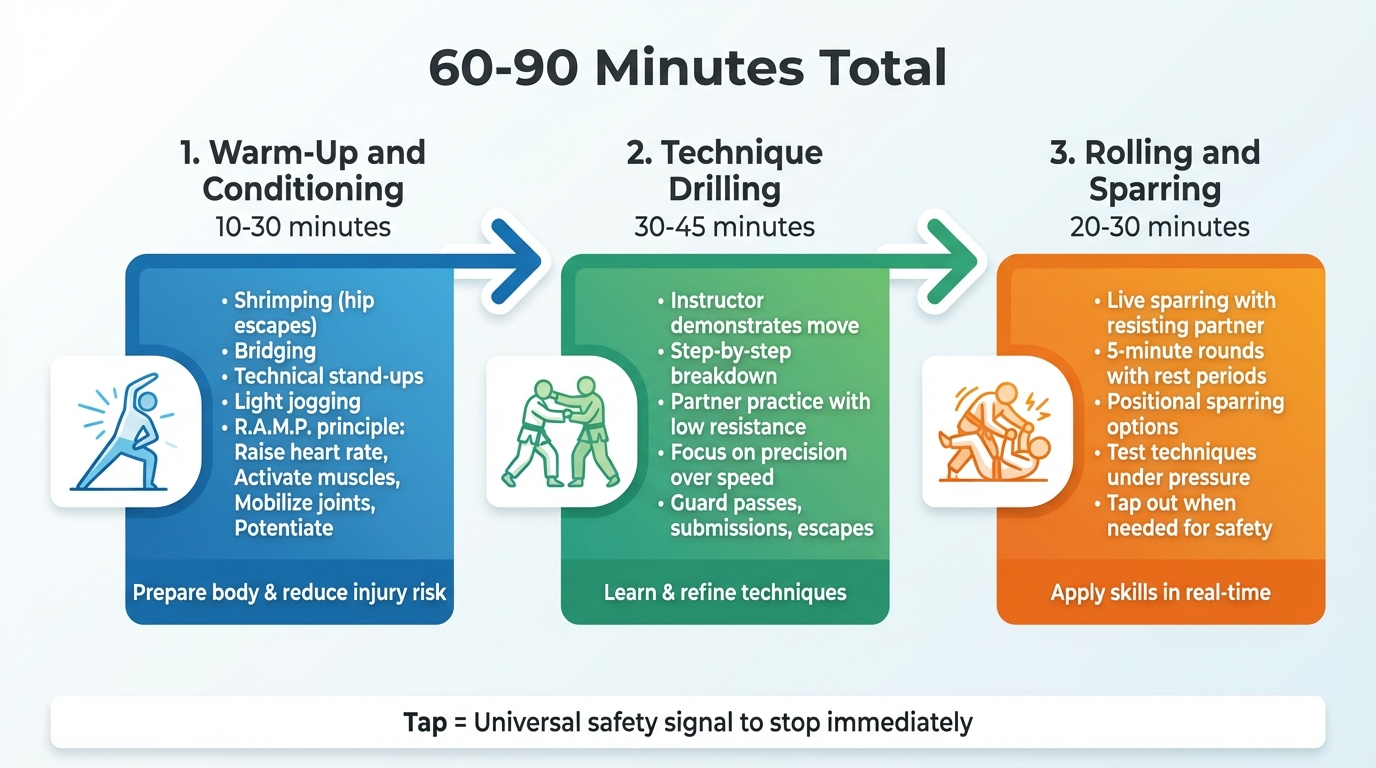
BJJ Class Structure: 3-Part Format and Timeline
Most Brazilian Jiu-Jitsu (BJJ) classes stick to a familiar three-part format, lasting between 60 and 90 minutes: warm-up, drilling, and sparring. This structure isn’t random - it’s designed to ease you into training, teach new techniques, and let you test them in real-time. The progression from light warm-ups to intense sparring ensures a safe and effective learning environment. As The Garden MMA puts it, "The consistency is intentional. When you know what's coming, you can focus on learning instead of bracing for the unknown." Let’s break down each phase.
Warm-Up and Conditioning
Every class kicks off with 10 to 30 minutes of dynamic movements tailored to grappling. You’ll practice foundational exercises like shrimping (hip escapes), bridging, technical stand-ups, and light jogging. These movements aren’t just warm-ups - they’re the building blocks of many techniques you’ll use later.
The goal here is twofold: to get your heart rate up and to prepare your body for the physical demands of class. This phase also helps reduce injury risk while reinforcing muscle memory for essential movements. As The Garden MMA explains, "The warm-up introduces movements you'll use in every technique - shrimping, bridging, rolling. They feel strange at first. They won't after a few weeks." Some schools follow the R.A.M.P. principle, which stands for Raise your heart rate, Activate muscles, Mobilize joints, and Potentiate with high-intensity exercises like sprawls [10].
Technique Drilling
Once warmed up, the focus shifts to technique drilling, which typically lasts 30 to 45 minutes. During this phase, the instructor demonstrates a specific move - like a guard pass, submission, or escape - breaking it down step by step. You’ll learn exactly how to position your body, where to place your grips, and why every detail matters.
After the demonstration, you’ll practice the technique with a partner, starting slowly and with little resistance. This isn’t a race; precision is the priority. Jiyu BJJ highlights the importance of this step: "Drilling isn't just mindless repetition; it's about cultivating discipline and refining your craft with every movement we practice." Small adjustments, like tweaking your grip or shifting your hips, can make all the difference. This is the time to ask questions and fine-tune your technique before moving on to sparring [6][8].
Rolling and Sparring
The final part of class - rolling, or live sparring - lasts about 20 to 30 minutes. Here, you’ll test your techniques against a resisting partner. Most gyms structure this with five-minute rounds and short rest periods in between. Some also incorporate positional sparring, where you start in a specific position, such as side control, and work on either escaping or maintaining control [11].
Sparring is where theory meets practice. You’ll discover what works under pressure and learn to stay composed even when your opponent is trying to submit you. Gracie Spring Hill stresses the right mindset for this phase: "Sparring isn't about winning; it's about learning and improving. Tap out when you need to; it's a sign of humility and respect for your partner's skill." Tapping - whether by physically tapping your partner or the mat, or saying “tap” aloud - is the universal signal to stop immediately, ensuring safety and allowing everyone to keep training [9][2].
What to Bring to Your First Class
Starting your Brazilian Jiu-Jitsu (BJJ) journey doesn’t mean you need to buy a bunch of gear right away. Many academies offer loaner Gis (the traditional uniform) for trial students, so you can test the waters before committing to a purchase. It’s smart to call ahead and ask about available gear and trial class policies - many schools provide free trial sessions or discounted introductory packages. If a loaner isn’t an option, wear athletic clothing like a rash guard and board shorts, steering clear of items with pockets, zippers, or belt loops, as they can snag during grappling.
In addition to clothing, pack a few essentials: a 32 oz water bottle, flip-flops, a towel, and a change of clothes. Flip-flops are a must for walking off the mats, especially in the restroom, to keep bacteria from spreading to the training area. A gym bag will help you stay organized, keeping your clean clothes separate from your sweaty gear. These basics will ensure you’re prepared and show respect for the training space.
Selecting Your Gear
Once you’ve attended a few classes and are ready to commit, investing in your own gear can elevate your training experience. When it comes to buying a Gi, timing is key. As Ricardo Rosa, author at LAJJ, explains:
"If you haven't purchased a GI yet (and you shouldn't until you're sure BJJ is for you), here's what to wear: A tight-fitting rash guard or athletic t-shirt... Athletic shorts without pockets or zippers."
When you’re ready, choose a Gi that fits properly - snug but not restrictive, allowing for full movement. While safety gear like a mouthguard and athletic tape for your fingers and toes isn’t essential for your first class, they become important once you start sparring regularly. If you wear braces, a custom-fitted mouthguard is especially helpful. For added comfort and security, men may prefer form-fitting boxer briefs, and women should consider a supportive sports bra under their rash guard or Gi.
Hygiene and Gym Etiquette
Cleanliness is non-negotiable in BJJ, both for your safety and that of your training partners. Trim your fingernails and toenails short to avoid scratching others or causing infections. Shower before class and wear freshly laundered clothes - this includes washing your Gi right after training to prevent bacteria buildup.
Before stepping onto the mat, remove all jewelry to minimize the risk of injury. Cover any small cuts or scrapes with athletic tape or a bandage, and skip training if you’re feeling unwell or have an active skin infection. Arriving 10 to 15 minutes early gives you time to sign waivers, introduce yourself to the instructor, and get settled. These habits not only keep everyone safe but also create a respectful and welcoming environment for all.
The Beginner Experience
Your First Few Weeks
Starting your Brazilian Jiu-Jitsu (BJJ) journey can feel a bit overwhelming. Movements like shrimping, bridging, and technical rolls might seem awkward at first, but that's completely normal. The key? Consistency. Training 2 to 3 times a week allows your body to recover while helping you build muscle memory over time [1][2][13].
Before you find a BJJ gym nearby, it helps to understand that Most academies take a cautious approach to introducing beginners. For instance, some gyms require students to train for about six weeks or master 44 specific techniques before participating in live sparring. This careful structure ensures you develop a strong foundation in positions like guard, mount, and side control without the added pressure of full-speed rolling [2]. During this phase, your main goal is simple: keep showing up and stay engaged. As one instructor at Fusion Academy wisely advises:
"I only compare myself to me, yesterday. Am I better than I was yesterday. That is the ONLY thing that really matters." [2]
You'll also learn an essential skill early on - tapping. Tapping out (by signaling submission with your hand or on the mat) is how you prevent injuries and stay safe [2][9]. With time, these basics will feel second nature, and seeking guidance will play a big role in your growth.
Getting Help from Instructors and Training Partners
As you settle into your training routine, you'll find that instructors and experienced training partners are there to support you every step of the way. Mentorship is a cornerstone of the BJJ community. During drills and sparring, instructors actively move around the mat, offering real-time feedback and encouragement to help you refine your techniques [14]. You'll often work with higher-ranked partners - like blue, purple, or brown belts - who ensure you're practicing safely and correctly [1][3][13].
Don’t hesitate to ask questions during practice. Instructors expect it, and it’s part of the learning process. If things feel overwhelming, it’s okay to slow down or take a break - no one expects you to keep up with seasoned athletes right away [2]. Instead, focus on breathing, staying relaxed, and developing good habits rather than relying on brute strength [4][3].
How to Choose a BJJ Academy
Once you understand what happens in a typical BJJ class, the next step is finding the right academy that fits your goals.
What to Look for in an Academy
Your choice of academy will greatly influence your Brazilian Jiu-Jitsu experience. Start by checking the head instructor’s credentials and lineage - a legitimate black belt should have a clear connection to recognized masters [15]. Beyond their qualifications, observe how instructors interact with students. Great coaches provide personalized feedback during drills and aren’t afraid to roll with students of all levels [15].
Think about what the academy specializes in. Some gyms focus on training competitive athletes, while others cater to hobbyists or emphasize self-defense techniques [15]. Also, find out if they offer Gi classes, No-Gi classes, or both, depending on what interests you [15]. As BJJ brown belt Zack Nicholas explains:
"The best bjj schools will be the ones who are strongly invested in the growth of their students as opposed to just the growth of their wallet." [15]
Pay attention to class structure and safety protocols. Look for beginner-friendly classes with a clear curriculum instead of gyms that throw newcomers into advanced sessions [15]. Many reputable academies require beginners to complete a foundational program - often around six weeks or focused on mastering specific techniques - before they can join live sparring [2]. Hygiene is another critical factor; a clean gym indicates professionalism and care [15]. Most academies offer free trial classes or discounted introductory packages, giving you the chance to experience the environment before committing [5].
Membership costs usually range from $70 to $200 per month, depending on the academy’s location and reputation [15]. Pricing details, as well as fees for belt testing or uniform requirements, are often discussed during or after a trial class, as many gyms don’t list prices online [16]. Arriving early to observe a class can also help you get a feel for the instructors, the students, and the overall vibe [5].
A good academy will reflect the principles of a well-structured class: organized, welcoming, and supportive. To simplify your search, consider using tools designed for comparing gyms.
Finding Academies with Brazilian Jiu-Jitsu Gyms Directory

The Brazilian Jiu-Jitsu Gyms Directory is a helpful resource for finding academies that match your preferences. This tool allows you to search by location and view detailed profiles, including contact information, class schedules, instructor credentials, and specific focuses like self-defense or competition training [7]. You can also read student reviews and ratings to learn more about a gym’s culture, teaching style, and cleanliness [16].
The directory makes it easy to compare academies side-by-side, filtering options by features like Gi versus No-Gi training, beginner-friendly programs, or proximity to your home or workplace [12]. It saves you time and effort by narrowing down your choices without the need to visit multiple gyms. Plus, the service is completely free for both users and gym owners, making it a convenient starting point for anyone beginning their BJJ journey.
Conclusion
Walking into your first Brazilian Jiu-Jitsu class can feel overwhelming, but understanding what lies ahead can make it much easier. Most classes follow a predictable flow: starting with a warm-up, moving into technique drills, and finishing with live sparring.
Success in BJJ isn’t about being naturally gifted - it’s about consistency. As The Garden MMA reminds us:
"The black belts in the room all had a first day exactly like yours. What separates them isn't talent. It's that they kept coming back" [1].
Focus on hygiene, safety, and respecting mat etiquette. Arriving 15–20 minutes early for your first class gives you time to handle paperwork and connect with your instructor. Building this foundation will naturally lead you to find the right academy to support your progress.
When choosing an academy, look for instructors with verified credentials and a curriculum suited for beginners. Many gyms offer free trial classes, and monthly memberships usually range between $80 and $200, depending on location and how often you plan to train [7].
The Brazilian Jiu-Jitsu Gyms Directory is a helpful tool for comparing academies. It lets you filter options by location, instructor qualifications, class schedules, and student reviews - all at no cost. Whether your focus is Gi, No-Gi, or competition training, this resource helps you find an academy that matches your goals. With these tips and resources, you’ll be ready to step onto the mat confidently and begin your journey in Brazilian Jiu-Jitsu.
FAQs
Do beginners have to roll?
No, beginners typically aren't required to spar during their first Brazilian Jiu-Jitsu (BJJ) class. Most gyms allow newcomers to focus on warm-ups, basic drills, or even just observing. This approach helps first-timers ease into the environment and grasp the class structure and techniques without feeling pressured.
How hard is sparring in class?
Sparring in class can be intimidating, especially if you're just starting out. It’s all about putting your techniques to the test in a high-pressure situation. But don’t worry - sparring happens in a controlled setting, where the main goal is growth, not perfection. While it might feel overwhelming at first, it’s an opportunity to build both your skills and your confidence step by step.
How do I pick a good BJJ gym?
To pick the right BJJ gym, pay attention to a few important elements: gym culture, instruction quality, and hygiene. A good gym should feel welcoming, have skilled instructors, maintain clean facilities, and offer well-structured classes that include warm-ups, drills, and sparring sessions.
You’ll also want to think about practical factors like location, schedule, and cost to make sure they align with your lifestyle and budget. Taking the time to visit the gym and watch a class in action can give you a better sense of whether it’s the right place for you.
Related articles
Share this article