
5 Tips for Storing BJJ Gear at Home
Keep your BJJ gear fresh and long-lasting: air out after training, wash before storing, use breathable bins, wall hooks, and fold properly.
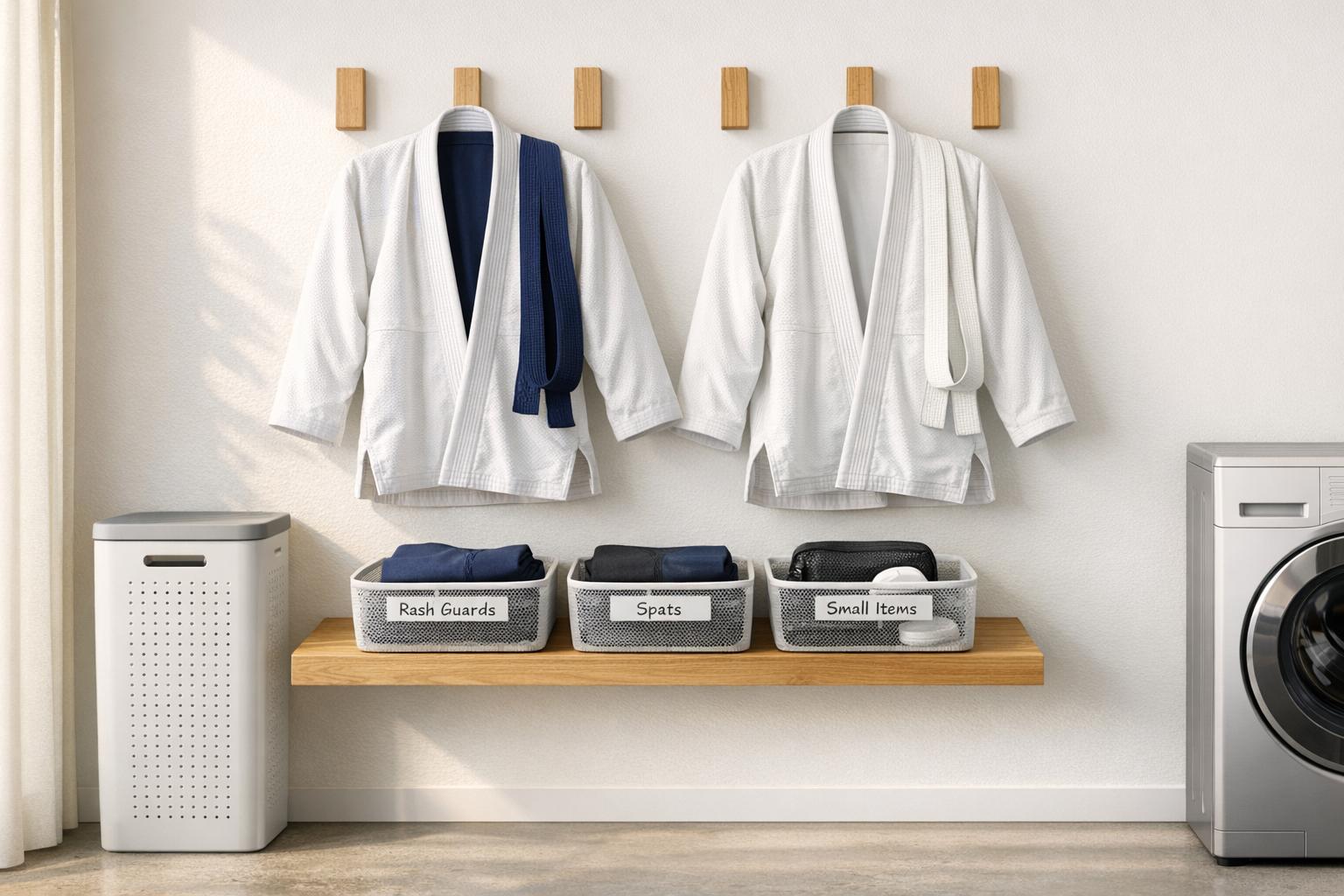
5 Tips for Storing BJJ Gear at Home
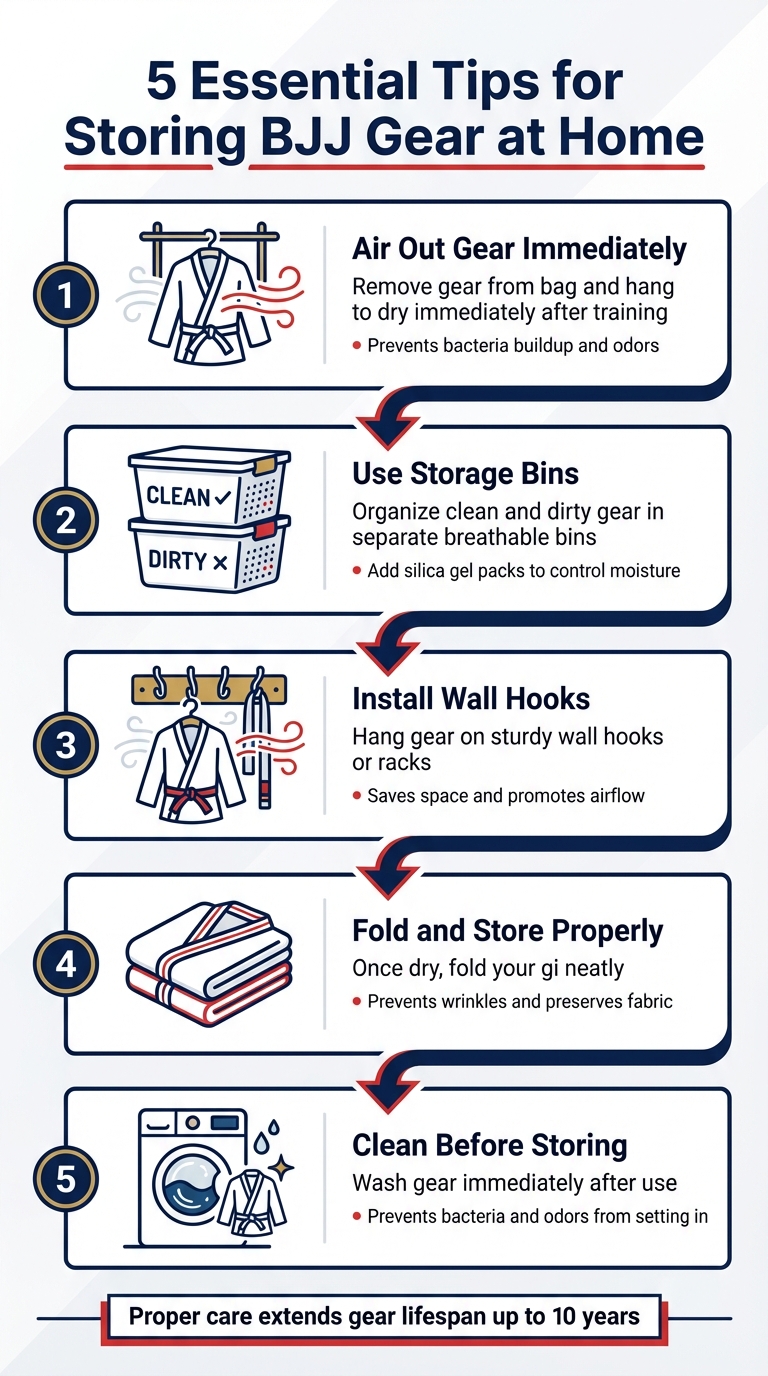
Storing your Brazilian Jiu-Jitsu (BJJ) gear properly can prevent odors, bacteria, and damage while extending its lifespan. Here are five practical tips to keep your gear in top condition:
- Air Out Gear Immediately: After training, remove your gear from your bag and hang it to dry. This prevents bacteria buildup and odors.
- Use Storage Bins: Organize clean and dirty gear in separate breathable bins, and add silica gel packs to control moisture.
- Install Wall Hooks: Save space and promote airflow by hanging gear on sturdy wall hooks or racks.
- Fold and Store Properly: Once dry, fold your gi neatly to prevent wrinkles and preserve its fabric.
- Clean Before Storing: Wash gear immediately after use to prevent bacteria and odors from setting in.
5 Essential Tips for Storing BJJ Gear at Home
Martial Arts Garage Gym | Part 3: Organize Your Gear
1. Air Out Gear Right After Training
Drying your gear immediately after training isn't just about keeping things fresh - it's a crucial step in stopping bacteria, like staph and ringworm, from thriving. Leaving sweaty equipment in your gym bag creates the perfect breeding ground for these pathogens. Let’s break down how to dry your gear effectively and keep it in top shape.
Prevention of Odor and Bacteria
The first step? Get your gi and rash guard out of your bag as soon as you can. Tsavo Neal, Founder of BJJ Equipment, emphasizes:
"If you can't wash it immediately after training, avoid letting it sit damp. That will cause your gi to get a permanent stink. Hang it up so it can dry."
Once bacteria settle into the fabric, even repeated washes might not fully get rid of the smell. For best results, hang your gear inside out. This ensures the inner lining, where sweat tends to collect, dries completely.
Space-Saving Drying Tips
Worried about space for drying? You don’t need a dedicated room. In smaller spaces, like apartments, a simple fan placed near your drying rack can work wonders. Wall hooks or wide-shoulder hangers are great for saving floor space while allowing air to circulate around your gear.
Protecting Your Gear’s Lifespan
Drying properly doesn’t just keep your gear fresh - it helps it last longer, too. Steve Brown from Garame Cleaning Co explains:
"Hanging your gi promotes airflow and maintains their shape."
Avoid using radiators, heaters, or leaving your gear in direct sunlight for too long, as these can weaken the fabric. Having at least two gis in rotation is a smart move, giving one enough time to dry fully while you train in the other.
Stay Organized and Ready
Set up a consistent spot for airing out your gear. Whether it’s wall hooks behind a door or a portable rack, keeping things organized ensures your gear is always ready for your next session. If you’re drying indoors, open a window to improve airflow and reduce the risk of mold. A little planning goes a long way in keeping your equipment clean, fresh, and ready to go.
2. Use Storage Bins and Labels
Once your gear is dry, storing it properly can make all the difference in keeping it fresh and extending its lifespan. Organizing your gear with clearly labeled bins not only keeps bacteria at bay but also makes your routine much smoother.
Separation of Clean and Dirty Gear
Keeping clean and used gear separate is crucial to avoid unwanted odors and bacteria. Dedicate specific bins for different items - like one for clean gis, another for rash guards, and a separate one for dirty gear. Labels or color-coded compartments can make this process even easier. For example, marking bins as "Clean Gis", "Rash Guards", or "Dirty Gear" ensures damp items don’t accidentally mix with your clean gear.
Breathable Materials Are a Must
Skip the airtight plastic bins, which can trap moisture and lead to unpleasant smells. Instead, opt for mesh bins or breathable garment bags to allow airflow. Smaller items like rash guards and spats also benefit from ventilated storage, keeping them fresh and ready for use. To take it up a notch, toss in a few silica gel packs to absorb excess moisture and maintain freshness.
Labeling for Convenience
Labels aren’t just about keeping things tidy - they also save you time. When you know exactly where everything is, you can grab what you need in seconds and head straight to training. As Brown puts it:
"Label compartments for quick gear retrieval."
If you have multiple gis, clear labeling makes rotating them a breeze. Regular rotation helps maintain the quality of your gear, potentially extending its life to nearly a decade.
Don’t Forget to Clean the Bins
Your storage system is only as good as its upkeep. Make it a habit to wipe down your bins with disinfectant and store them in a cool, dry place away from direct sunlight. This small step ensures both your storage containers and your gear stay in top condition.
For an even more efficient setup, consider adding wall hooks and racks to free up floor space and make accessing your gear even easier.
3. Install Wall Hooks and Racks
Once you’ve nailed down proper drying practices, the next step is to install wall hooks and racks. This simple setup not only keeps your gear dry and fresh but also helps you reclaim floor space by creating a dedicated storage area.
Prevention of Odor and Bacteria
Hanging your gear isn’t just about organization - it’s about keeping bacteria and odors at bay. When your gear is left crumpled in a gym bag or storage bin, the damp environment becomes a breeding ground for bacteria. This is especially true for cotton-based items like gis, where bacteria can penetrate the fibers, feed on the material, and eventually weaken it. Hanging your gear allows airflow to do its job, drying the fabric quickly enough to stop bacteria in its tracks. As RVCA advises:
"Store your kimono on a wide-shoulder hanger in a well-ventilated space free from moisture to prevent bacteria or mildew from forming on the fabric".
By keeping your gear dry, you’re not just fighting odors - you’re also protecting its integrity.
Space Efficiency
Wall-mounted racks are a game-changer for freeing up space. Heavy, wet gis can clutter your floors or furniture, but moving them to sturdy wall hooks clears the mess. Since a wet gi weighs much more than a dry one, make sure to anchor your hooks securely into wall studs or use proper anchors. For smaller items like belts or rash guards, mesh cubbies mounted on the wall keep everything visible and within reach. This vertical storage solution turns unused wall space into a practical gear station.
Gear Longevity
Hanging your gear properly can add years to its lifespan. High-quality gis can last up to a decade if cared for correctly. Use wide plastic or wooden hangers to avoid rust or dents that could damage the fabric. Air-drying your gi typically takes 20–30 hours, and while it’s slower than a dryer, it’s much gentler on the cotton fibers. Mechanical dryers, on the other hand, can shrink your gi, warp the collar, and degrade the material over time. Just be sure to avoid direct sunlight, as UV rays can fade colors and weaken the fabric.
Ease of Organization
A wall-mounted station also helps you stay organized. Keeping your BJJ gear separate from your everyday clothes makes things easier to find and maintain. Steve Brown from Garame Cleaning Co emphasizes this point:
"Hanging your gi promotes airflow and maintains their shape".
For pants, tie the drawstring before hanging to prevent it from slipping into the waistband. Adding a fan near your rack can speed up the drying process even further, ensuring your gear is ready for your next session without any hassle.
sbb-itb-d583f1e
4. Fold and Store Gis and Belts Correctly
Once your gear is completely dry - usually after 20 to 30 hours depending on your climate - proper folding is the next step to ensure it stays in great shape. Folding your gi and belt correctly helps preserve the fabric, reduce unnecessary wear, and keep everything organized for your next session.
Prevention of Odor and Bacteria
Damp or crumpled gear is a breeding ground for mold, mildew, and unpleasant odors. Worse, it can harbor bacteria and fungi, increasing the risk of skin infections like staph or ringworm. To tackle stubborn odors, try soaking your gi in a mix of 25% white vinegar and 75% water before washing. The key here? Make sure your gear is fully dry before folding to avoid these issues.
Space Efficiency
Neatly folded gear not only protects it but also saves space. Whether you're organizing a drawer or packing a gym bag, proper folding makes life easier. Here's a simple method for folding your gi:
- Lay the jacket flat with the back facing down.
- Fold each sleeve across the chest so the cuffs meet in the center.
- Fold the jacket lengthwise, bringing the bottom hem up to the collar.
- Place your folded pants on top.
For travel, you can use the "pants-inside" method: fold the pants in half and place them inside the jacket before folding everything together. This keeps your gear compact and ready to go.
Gear Longevity and Organization
Folding your gi helps prevent it from becoming stiff, misshapen, or wrinkled - issues that often arise if it's left crumpled after drying. Start by laying the gi flat on a smooth surface and smoothing out any wrinkles with your hands. When it comes to belts, fold them in half twice and place them neatly on top of your gi bundle. This keeps everything together and ensures your gear is ready for the next training session.
To keep things organized, designate a specific shelf or area just for your BJJ gear. Separating it from everyday clothing reduces wear and makes it easier to find. If you're storing your gear for an extended period, consider using breathable garment bags to protect it from dust while allowing air circulation. Avoid plastic bags, as they can trap moisture and lead to mildew. Proper folding and storage not only extend the life of your gear but also reflect the discipline and respect central to the sport.
5. Clean Gear Before Storing
Taking care of your BJJ gear doesn’t stop at airing and folding - it starts with cleaning. Washing your gear immediately after training is essential to keep bacteria at bay. Leaving sweaty gear in your gym bag overnight is a recipe for disaster. Sweat and bacteria can soak into the fabric, creating odors that are tough to eliminate. Worse, unwashed gear increases the risk of skin infections like staph and ringworm.
Prevention of Odor and Bacteria
Washing your gear right after training is the best way to avoid lingering smells and bacterial growth. Use cold water (around 90–100°F) to clean the fabric without causing shrinkage. Don’t forget your belt - it collects just as much bacteria as the gi, despite old myths suggesting otherwise. For stubborn odors, adding white vinegar or a laundry sanitizer to the rinse cycle can work wonders. Once washed, drying and storing your gear properly is just as important to keep it fresh and bacteria-free.
Gear Longevity
Sweat, bacteria, and oils aren’t just unhygienic - they can wear down your gear over time. RVCA emphasizes this point:
"The accumulation of bacteria can break down the material and washing it right after training is your best defense against any buildup".
After washing, air drying is the way to go. A gi typically takes 8 to 12 hours to dry when hung in a well-ventilated space. This method avoids the shrinkage and warping that high-heat dryers can cause, helping your gear last longer. Pay special attention to the collar, ensuring it’s completely dry to prevent any moisture from lingering.
Ease of Organization
Keeping your gear clean isn’t just about hygiene - it’s about convenience too. When your gear is freshly washed and dry, it’s ready to grab and go, saving you from the hassle of a last-minute scramble. Plus, clean gear won’t contaminate other belongings in your bag or closet. Steve Brown from Garame Cleaning Co puts it best:
"Never put damp or dirty gear away - it's a recipe for bacteria and stink".
Conclusion
Taking proper care of your BJJ gear isn’t just about cleanliness - it’s about protecting your health, extending the life of your equipment, and making your training routine smoother. Simple habits like airing your gear right after practice, keeping it organized, using hooks for storage, folding it properly, and washing it before storing go a long way in preventing bacteria, eliminating odors, and ensuring your gear is always ready for action.
This level of care mirrors the discipline and respect inherent in Brazilian Jiu-Jitsu. As Nathan Hughes from Continuous Flow BJJ wisely states:
"Taking care of your grappling gear is an investment in your health, performance, and the longevity of your equipment."
When your gear is clean, fresh, and organized, you can focus more on your training and less on last-minute scrambles to find what you need. It’s also a reflection of the respect you have for yourself, your training partners, and the art of Brazilian Jiu-Jitsu itself.
Once your gear routine is in check, the next step is finding a quality place to train. The Brazilian Jiu-Jitsu Gyms Directory at bjjacademyfinder.com makes this easy by helping you connect with top academies across the United States. You can search by location, read reviews, and explore detailed information about programs and instructors - all at no cost.
Keep your gear in top shape, stay organized, and train with confidence knowing you’re always ready to hit the mats.
FAQs
How can I keep my BJJ gear smelling fresh and odor-free?
To keep your BJJ gear smelling clean, make it a habit to wash it right after training. Use cold water and a mild antibacterial detergent to avoid damaging the fabric. Skip the fabric softeners - they can actually lock in odors rather than remove them. Always air-dry your gear thoroughly before putting it away, as dampness can cause unpleasant smells to develop.
For an extra layer of odor control, try adding a little white vinegar or baking soda to your wash. Additionally, keep your gear bag fresh by airing it out regularly and using odor-absorbing items like charcoal deodorizers. These small steps can make a big difference in keeping your gear fresh and ready for your next session.
How can I store clean and dirty BJJ gear separately at home?
Keeping your clean and dirty BJJ gear separate is essential for hygiene and gear longevity. Use shelves, hangers, or storage bins to neatly organize and store your clean gear, ensuring it's ready for your next session. For dirty gear, opt for a ventilated bag or container that allows airflow. This helps minimize odors and prevents mildew from forming. Separating these items not only keeps things tidy but also ensures your gear stays in top condition.
Why shouldn’t I use a dryer for my BJJ gear?
Using a dryer for your BJJ gear isn’t a great idea. The high heat can shrink your gi and damage the fibers, leaving you with a poor fit and a shorter lifespan for your gear.
A smarter choice? Air drying. Hang your gi in a well-ventilated space and let it dry naturally. This simple step helps keep its shape intact and ensures it lasts much longer.
Related articles
Share this article